
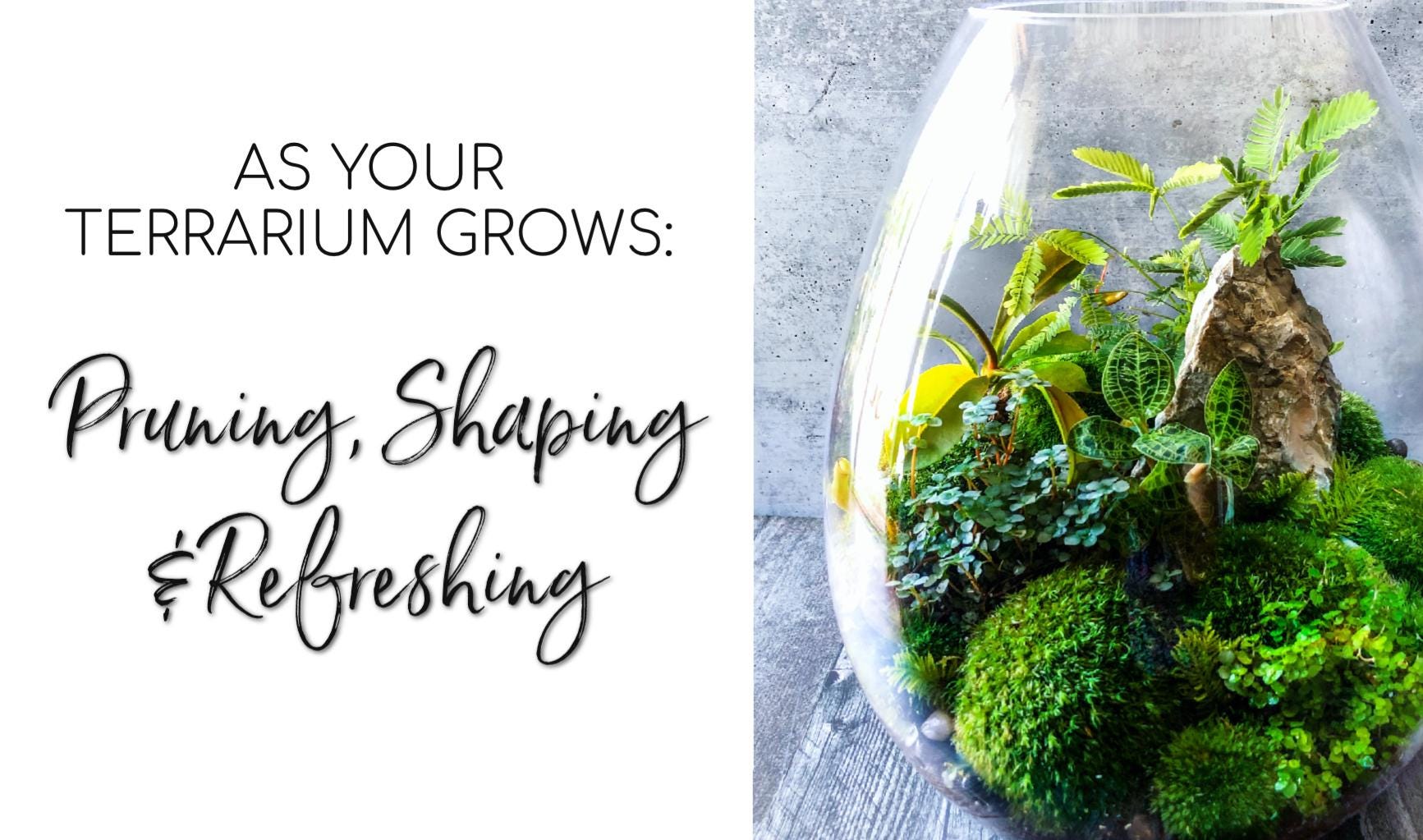
Nurturing a living landscape: a guide to pruning, maintaining, and rejuvenating your miniature garden
One of the most rewarding things about creating a terrarium is watching it evolve over time. Tiny plants begin to fill in, moss creeps across rocks and branches, and what was once a newly planted garden gradually develops a unique character of its own.
But what happens when your miniature landscape starts to look a little less miniature? Perhaps the moss has swallowed up your carefully placed stones, a fern is pressing against the glass, or one particularly enthusiastic plant is crowding out its neighbors.
An overgrown terrarium isn’t necessarily an unhealthy one. In fact, vigorous growth is often a wonderful indication that your plants are happy in their environment. However, even a well-established terrarium can benefit from occasional maintenance. Knowing what to trim, what to leave alone, and when to give a plant a new home can help keep your terrarium thriving for many years.
Does Your Terrarium Actually Need Pruning?
Before reaching for the scissors, take a moment to observe your terrarium. A lush, densely planted enclosure can be both beautiful and healthy. There is no need to prune simply because your plants have grown larger than they were when you first planted them. However, it may be time for a little maintenance if:
- Larger plants are shading out smaller, slower-growing species.
- Leaves are becoming damaged or deteriorating against the glass.
- Moss is growing over neighboring plants.
- Dead foliage is accumulating beneath dense growth.
- Important landscape features have disappeared beneath vegetation.
- Plants no longer have enough room to develop new leaves naturally.
How much maintenance is necessary will also depend on the type of terrarium you’ve created. A lush botanical terrarium may be intended to resemble a miniature jungle, while a carefully designed moss landscape may require more frequent grooming to retain its original appearance.
When a Full Terrarium Can Stay As It Is
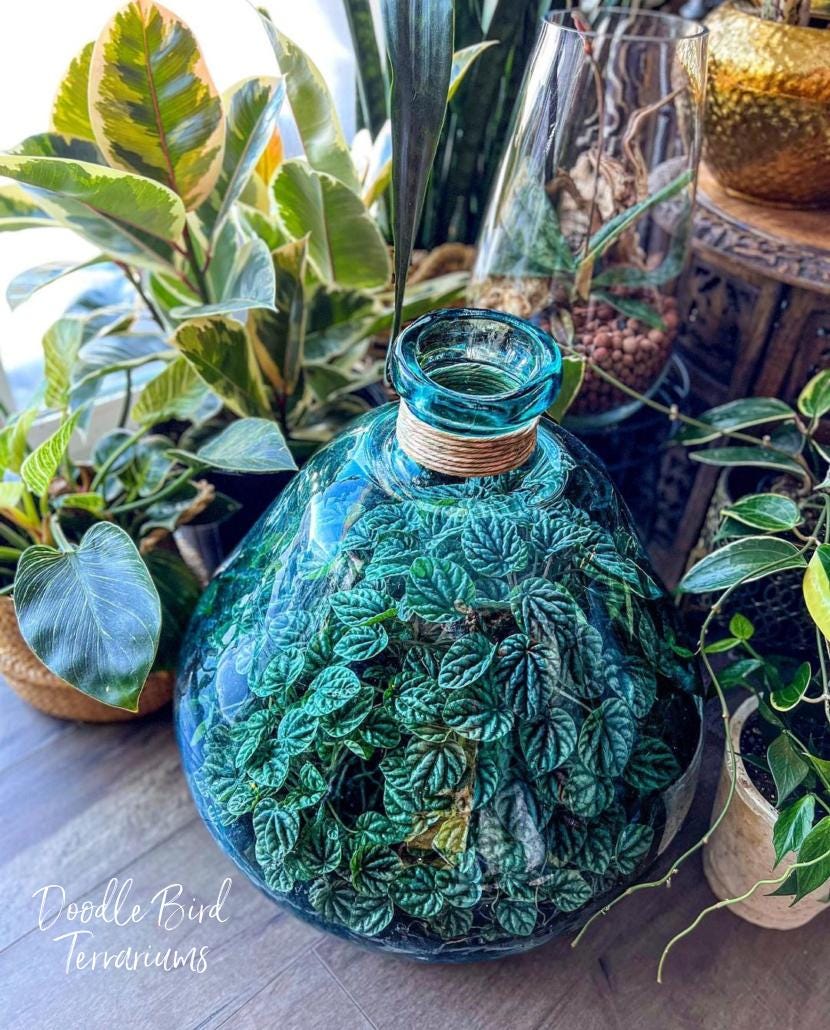
A wonderful example is this mature Ripple Peperomia (Peperomia caperata) growing inside a large blue glass bottle. Over the years, its beautifully textured leaves have filled much of the available space, creating a striking display that requires relatively little intervention. The terrarium originally contained two ferns, but the vigorous nature of the Peperomia eventually meant those plants were being starved out. Ultimately, I decided to remove the ferns entirely and let the Peperomia grow wild.
How to Prune Overgrown Terrarium Plants
You don’t need an elaborate collection of tools to maintain a terrarium. A pair of clean, narrow scissors, long tweezers, and a small, soft brush are often all you need. Different plants benefit from different pruning techniques.
Trailing and creeping plants
Plants such as creeping fig and many small-leaved trailing species can be shortened by cutting their stems just above a healthy leaf node. Remove unwanted runners before they become tangled throughout the enclosure.
Clump-forming plants
Plants such as ripple peperomia grow from a central crown. Rather than cutting across the entire mound of foliage, selectively remove older or oversized leaves at the base of their stalks, or pinch off the top growth. If the plant has simply become too large, dividing it or moving it to another container may be a better solution.
Ferns
Remove individual oversized, damaged, or aging fronds near their base rather than cutting across the tips of the foliage. If a fern consistently outgrows its enclosure, it may not be the right species for a terrarium of that size.
Spreading plants
Even plants sold as miniature varieties can eventually occupy a surprising amount of space.
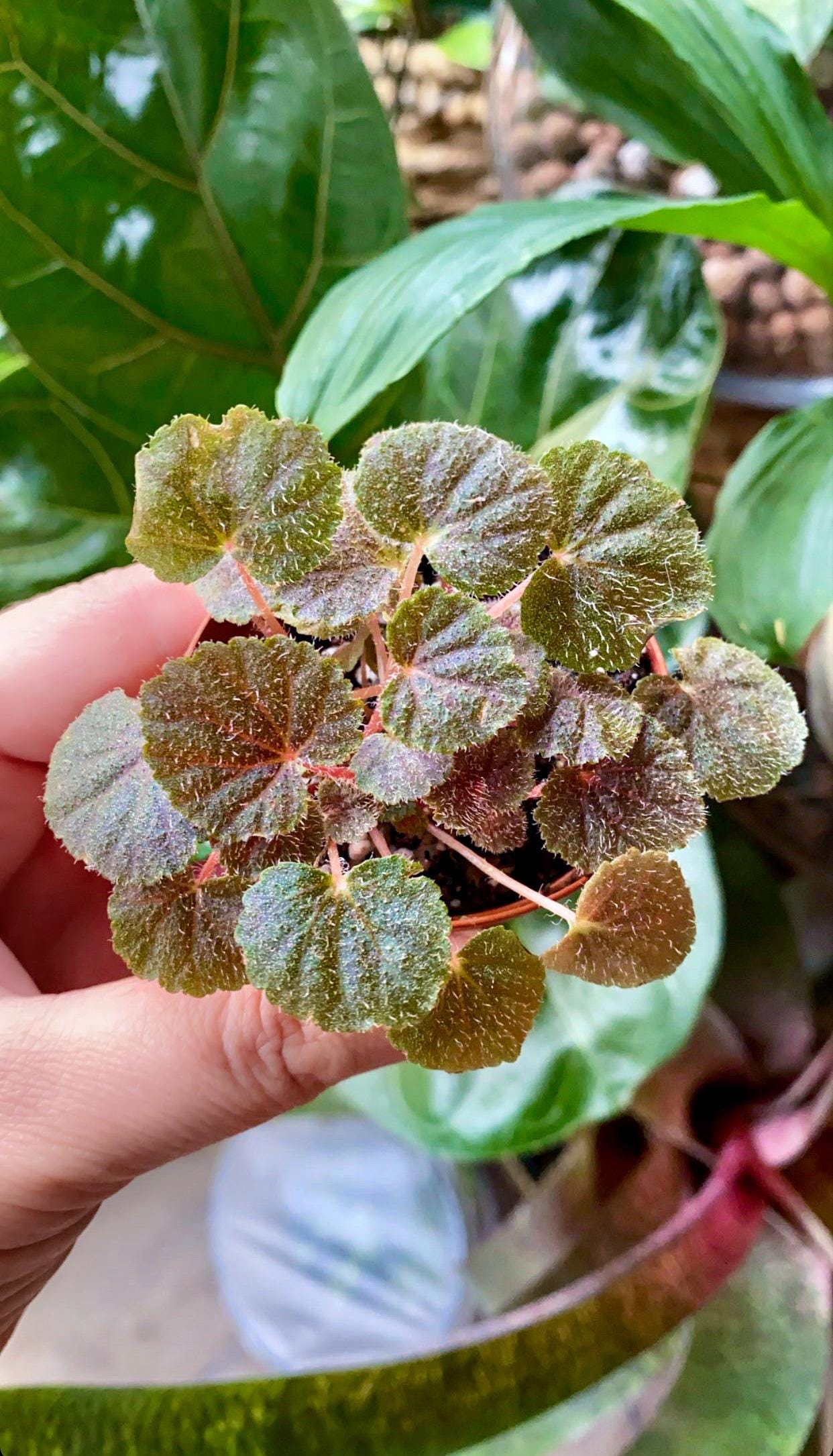
Begonia hoehneana, for example, has wonderfully small leaves and delicate flowers, but its spreading growth habit means it can gradually claim a considerable portion of the terrarium floor. When selecting terrarium plants, consider their growth habit as well as their mature height.
How to Maintain an Overgrown Moss Terrarium
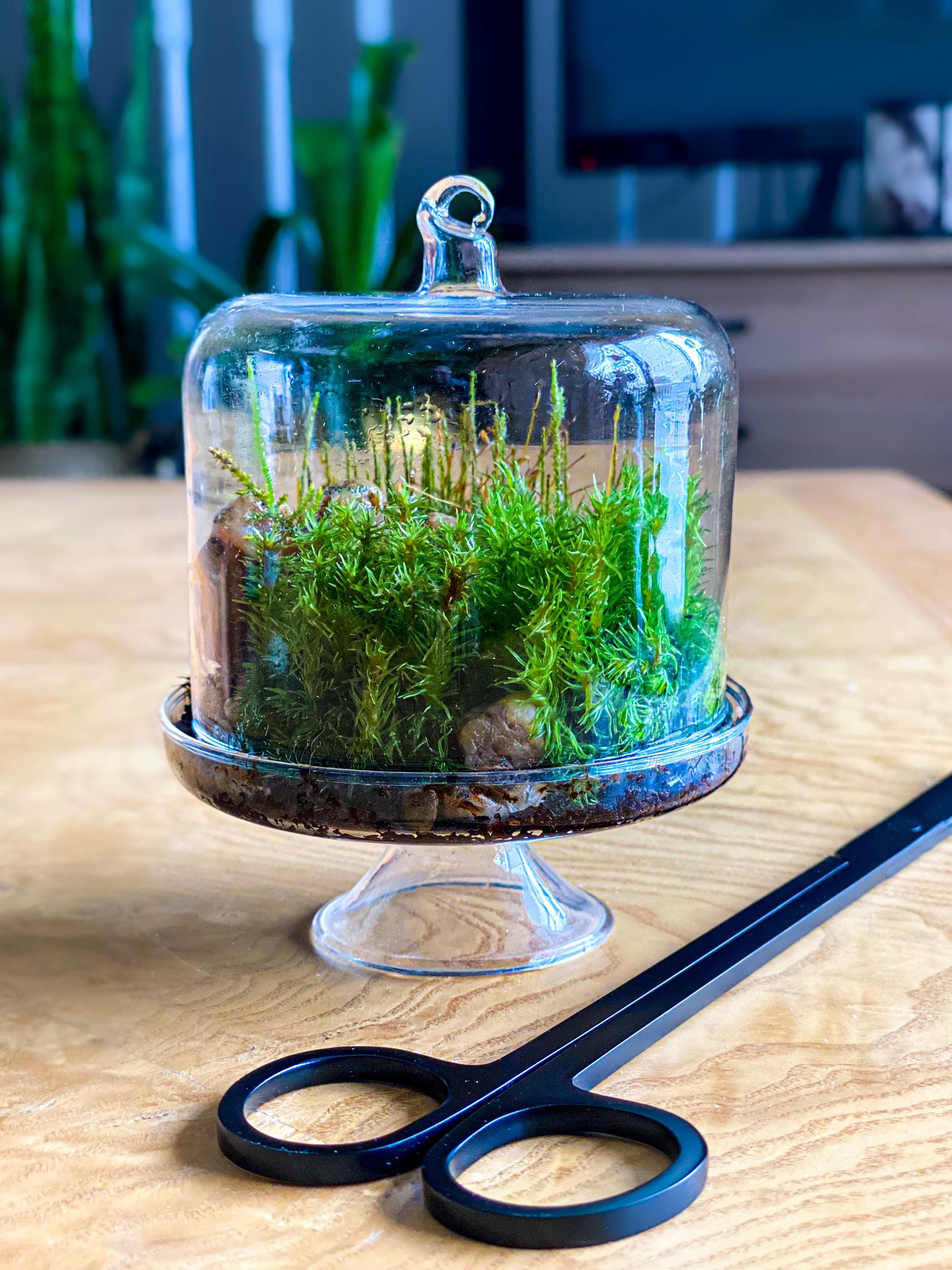
Moss terrariums present a slightly different set of challenges. Rather than producing large leaves or wandering vines, moss can gradually form thick cushions, spread across hardscape, and obscure the little details that make a miniature landscape so captivating.
Different species of moss also grow at different rates. A creeping moss may spread rapidly across a surface, while an upright species may develop into a dense, increasingly tall mound. Fortunately, established moss landscapes can often be refreshed without having to start over.
Trimming Moss
Many commonly grown terrarium mosses can be carefully trimmed using small, sharp scissors. For upright mosses, selectively shorten excessively tall shoots to restore the desired shape. For creeping mosses, trim wandering growth along the edges of rocks, pathways, and other landscape features. Work in small sections, following the natural contours of the landscape rather than cutting everything to a uniform height. Avoid cutting too deeply into a moss cushion or removing all of its healthy green growth.
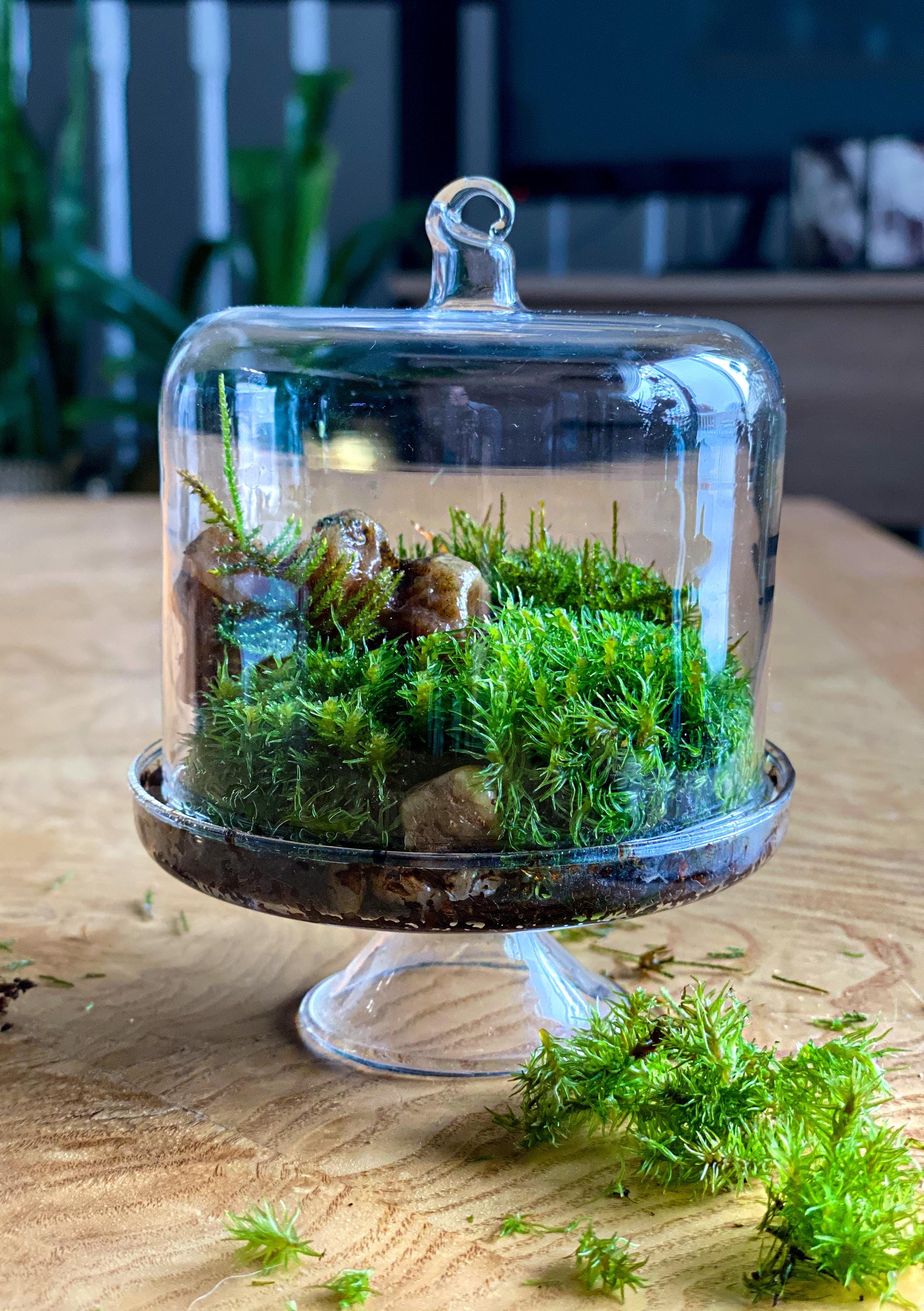
Different moss species respond differently to trimming, so a conservative approach is best. Still, don't be afraid to give your moss a good haircut (see below). Use tweezers to remove loose clippings when you’re finished. These clippings can often be used to grow into new moss mats. Simply place the pieces on an appropriate substrate such as coco coir, and cover to lock in humidity.
Thinning Dense Moss
Sometimes the problem isn’t the height of the moss but its thickness. An established mat of moss may develop layers of older growth beneath the green surface. While some browning underneath is natural, excessively dense or deteriorating growth can benefit from thinning. Using fine tweezers, gently separate and remove small portions of the moss where necessary. If a particularly thick patch is declining, healthy green portions can sometimes be separated and repositioned on the substrate.
Reclaiming Rocks, Pathways, and Miniature Details
One of my favorite aspects of moss terrariums is their ability to mimic full-sized natural landscapes. Moss-covered boulders, miniature forest floors, and tiny winding pathways can create a remarkable sense of scale. Over time, however, moss may completely conceal these features.
To restore the original landscape:
- Carefully trim moss away from the edges of pathways and water features.
- Use tweezers to remove unwanted growth from between stones.
- Gently brush loose debris from exposed hardscape.
- Leave some moss growing over rocks and wood to preserve a natural, established appearance.
- Vary the height and thickness of the moss to create depth and texture.
You don’t necessarily want your terrarium to look newly planted again. Some of its most beautiful qualities may have developed naturally over time. The goal is to restore balance while preserving that wonderful sense of age.
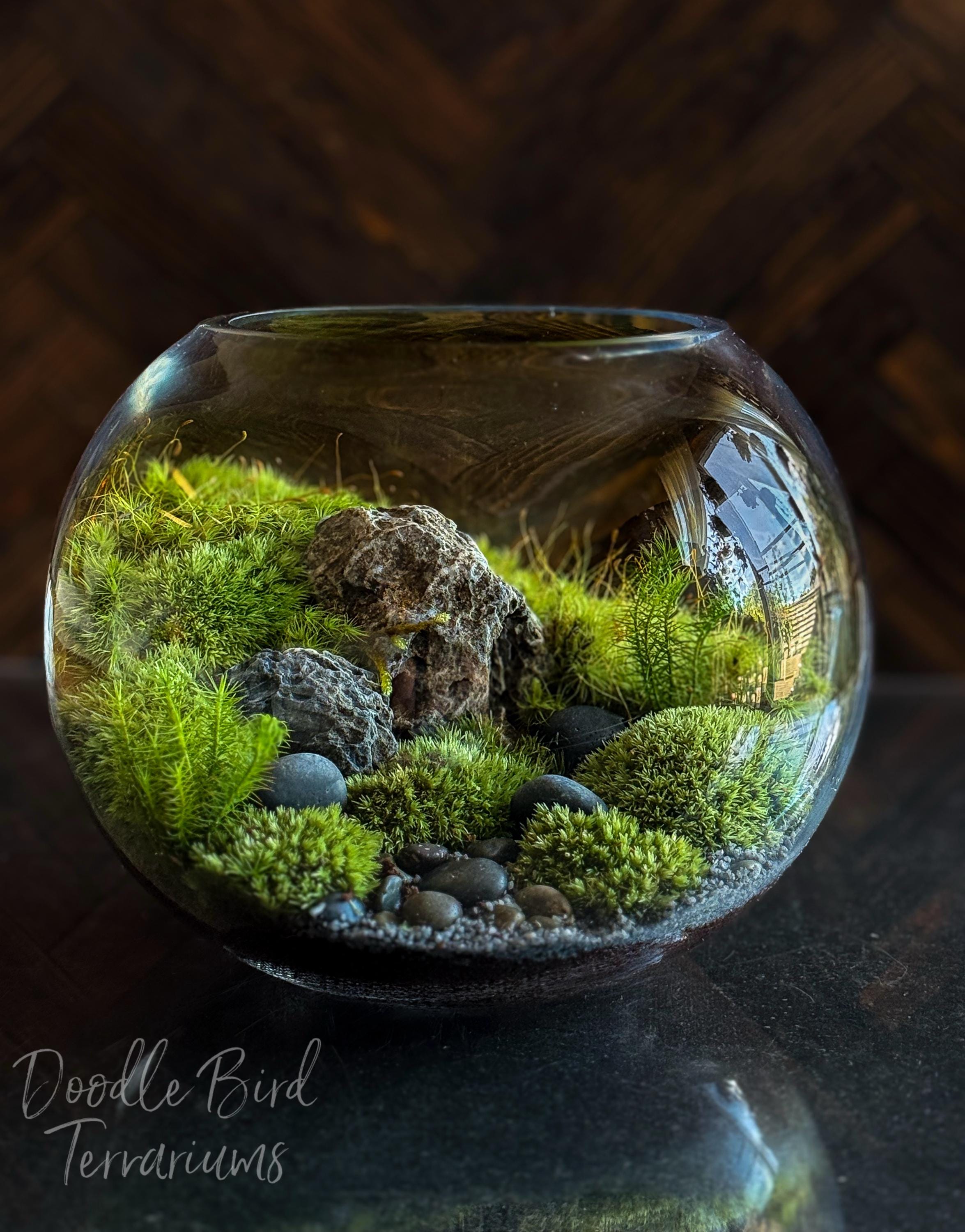
Emerald Mountain Meadow Terrarium illustrates how mosses can perfectly imitate a full sized natural landscape
What If the Moss Is Turning Brown?
Discoloration can occur for several reasons, including excessive moisture, insufficient moisture, unsuitable lighting, mineral buildup, or the natural aging of older growth. Before removing large sections, try to identify the underlying cause. Trimming damaged moss may improve its appearance, but it won’t correct an unsuitable growing environment. However, it is important to remove the brown pieces in order to keep it from spreading to the entire mat.
For more information, see my photographic guide to trimming and caring for discolored moss.
When a Plant Needs a Bigger Home
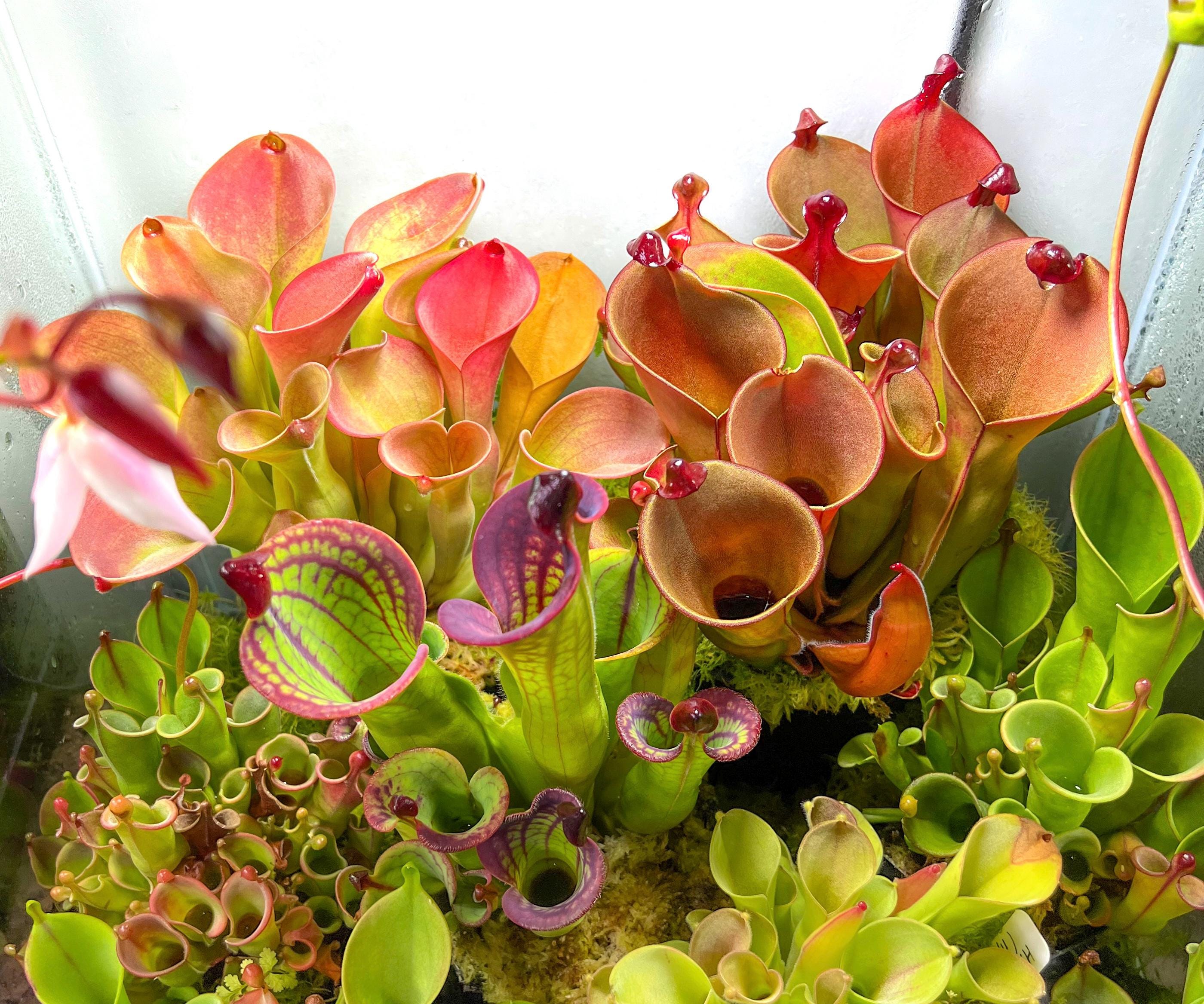
Sometimes pruning simply isn’t the answer. This sun pitcher plant (Heliamphora macdonaldae) is a good example. Its upright pitchers are specialized leaves, and cutting their tops off simply to fit the plant beneath a lid would sacrifice much of its natural beauty and function. As this specimen matured, it became too tall for the closed enclosure and the top started pressing against the lid. It eventually needed to be moved into a greenhouse cabinet with more vertical growing space.
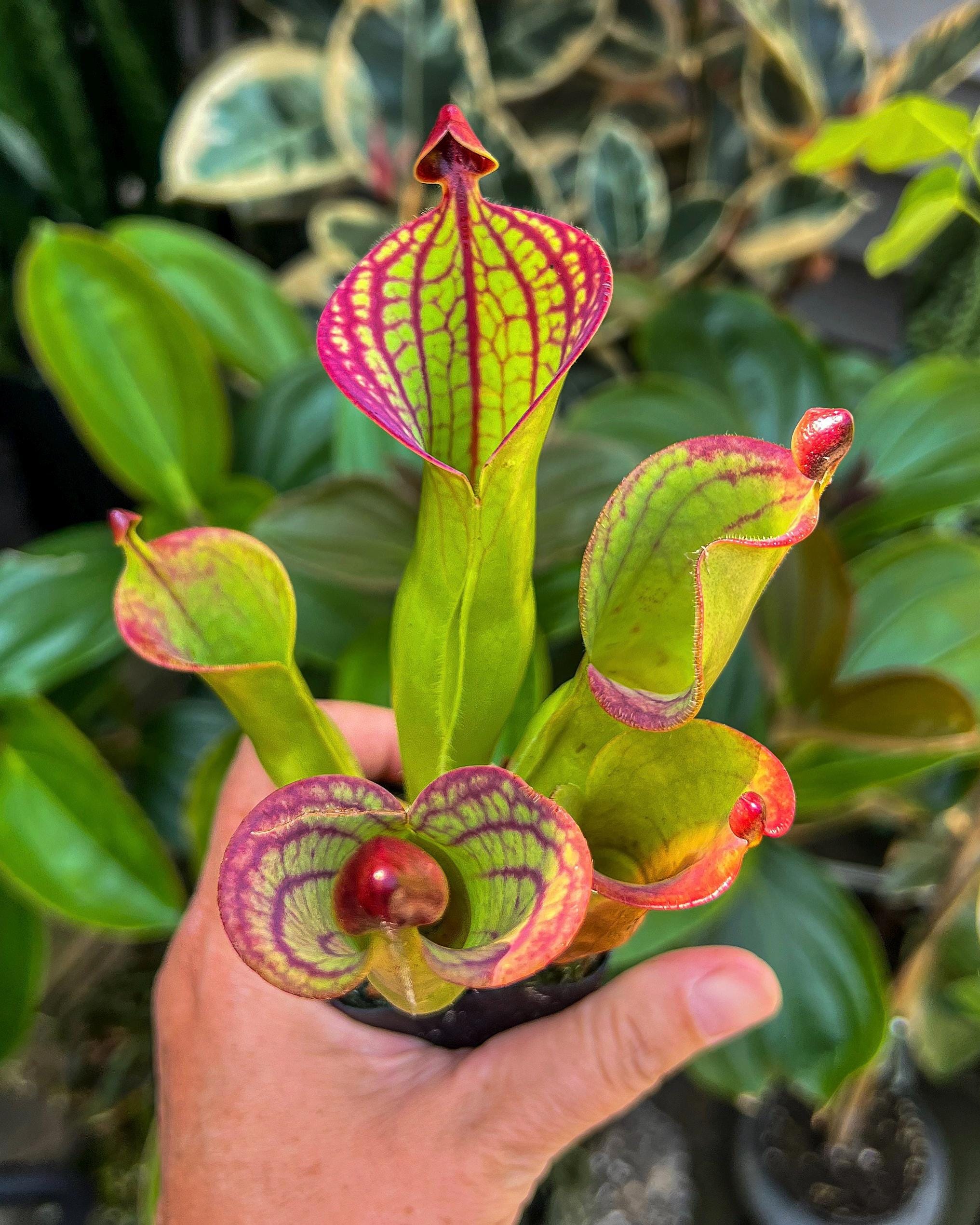
Before transplanting a terrarium plant, make sure its new environment can accommodate its requirements for humidity, light, temperature, and substrate. Humidity-sensitive plants, in particular, may struggle if moved directly from a closed terrarium into ordinary household conditions.
Maintaining Growth Over Time
Although growth is a natural and desirable part of keeping a living terrarium, a few thoughtful decisions can make long-term maintenance considerably easier.
Choose plants based on their mature size and growth habit rather than how small they are when purchased. Give spreading species enough room to develop without immediately competing with their neighbors.
Provide appropriate lighting rather than reducing light simply to discourage growth. Insufficient light can lead to weak, elongated growth and declining plant health.
Most importantly, make small adjustments as needed. Removing a wandering stem or trimming a patch of moss occasionally is much easier than tackling years of unchecked growth all at once.
Keeping a Record of Your Terrarium’s Growth
Because we see our terrariums every day, it can be surprisingly difficult to notice gradual changes Taking occasional photographs from the same angle is a wonderful way to document growth, identify changes in plant health, and see how your miniature landscape has evolved.
You can keep these photographs in a dedicated folder, a gardening journal, or my personal favorite: use a plant collection tracker such as Collecto.rs, a free platform that allows growers to organize plant photographs and growing notes. Recording when you’ve pruned, divided, or relocated a plant can also help you better understand its growth habits over time.
Embrace The Changing Landscape
A living terrarium is never truly finished. Even the most carefully designed miniature landscape will change as plants mature, moss spreads, and nature gradually softens the edges of our original creation. Occasional pruning and maintenance allow us to guide that process without fighting it. And sometimes, the most beautiful thing we can do is simply let it grow.
Written in part by Patricia Buzo of Doodle Bird Terrariums with special thanks to the contributions of guest blogger David Fefferman, co founder of collecto.rs